
Welcome to ATCC B2B Exchange Gateway!
Premium Subscription

About LaBassa Holding Co. Ltd.
Read more
Company Name: LaBassa Holding Co. Ltd.
We build long term structured wealth for our investors through real estate. From raising capital to deploying it, we create tailored structured financial solutions for our clients. We take a conservative approach, while at all times seeking to deliver superior risk adjusted returns for our investors.
News & Event

Labassa Capital Credit Fund Update – February 2026
22 August, 2026
The Fund delivered a 10.30% p.a. net investor return on a 12-month rolling basis, with an investment pipeline of approximately $750 million.

Proposed Tax Changes on Discretionary Trusts and Capital Gains
22 August, 2026
The Australian government has proposed significant changes to the taxation of discretionary trusts and capital gains, with the final details still under consultation. The key proposals are outlined below. A New Minimum Tax on Discretionary Trusts A 30% Minimum Tax: From 1 July 2028, a new 30% minimum tax will apply at the trustee level on the income of most discretionary trusts. End to "Income Splitting": Beneficiaries will receive a non-refundable tax credit for the 30% tax paid. This significantly reduces the tax benefits of distributing income to family members on lower tax rates. Impact on "Bucket Companies": The new rules effectively end the use of "bucket companies" to receive trust distributions at the corporate tax rate. Distributions to a company will be taxed at an estimated effective rate of 51% when combined with the 30% trustee tax. Exemptions: The tax will not apply to fixed trusts, deceased estates, complying superannuation funds, or income from primary production.
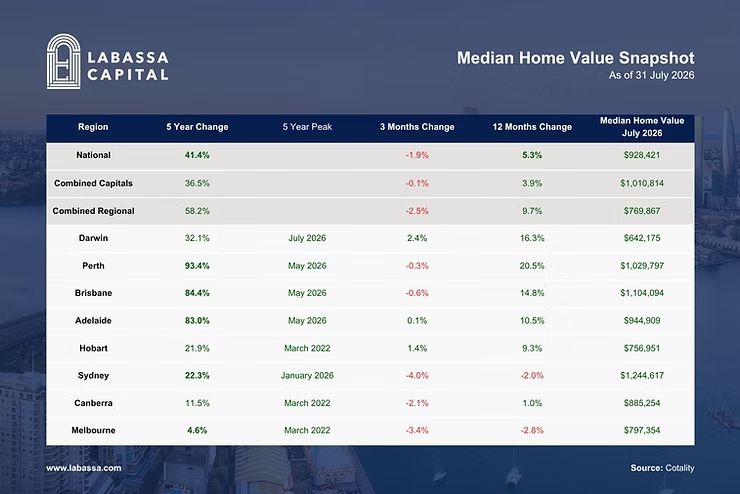
Market Insights | The Five-Year Shift in Australia's Housing Market
22 August, 2026
National median dwelling values increased 41.4% over the five years to July 2026, reaching $928,421. Growth was heavily concentrated in Perth (+93.4%), Brisbane (+84.4%) and Adelaide (+83.0%), which emerged as the standout performers of the cycle. Melbourne materially underperformed the national market, highlighting a significant shift in housing market leadership away from the traditional east coast capitals. Australia's median dwelling value reached $928,421 as at 31 July 2026, representing 5.3% growth in the past 12 months and a 41.4% increase over the past five years. However, the national figure only tells part of the story. The current housing cycle has been defined by exceptional growth across Perth, Brisbane and Adelaide. Over the five years to July 2026, dwelling values increased 93.4%, 84.4% and 83.0% respectively, significantly outperforming the national market. In contrast, Melbourne recorded only modest growth over the same period, while Sydney also underperformed relative to the smaller capital cities. This represents a notable shift from previous cycles, when Australia's largest capitals were the primary drivers of housing market growth.
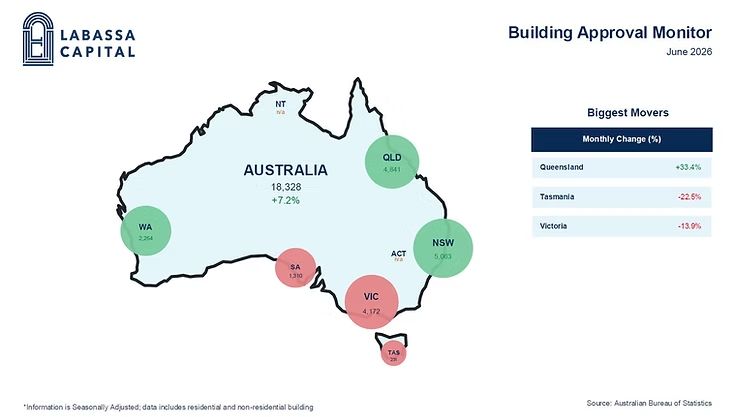
Australian Building Approvals Monitor | June 2026
22 August, 2026
Queensland recorded the strongest increase in dwelling approvals in June 2026, rising by 33.4% month-on-month, while New South Wales increased by 13.2% and Western Australia rose 10.7%. In contrast, Tasmania recorded the largest decline at -22.5%, followed by Victoria at -13.9% and South Australia at -11.5%. Total dwelling approvals increased by 7.2% to $18,328 (from $17,019, May 2026) dwellings in June. Private sector house approvals rose 0.4% to $10,631 (from $10,537, May 2026) dwellings, while private sector dwellings excluding houses increased 17.8% to $7,138 (from $6,034, May 2026) dwellings, driven by stronger medium and high-density residential activity.
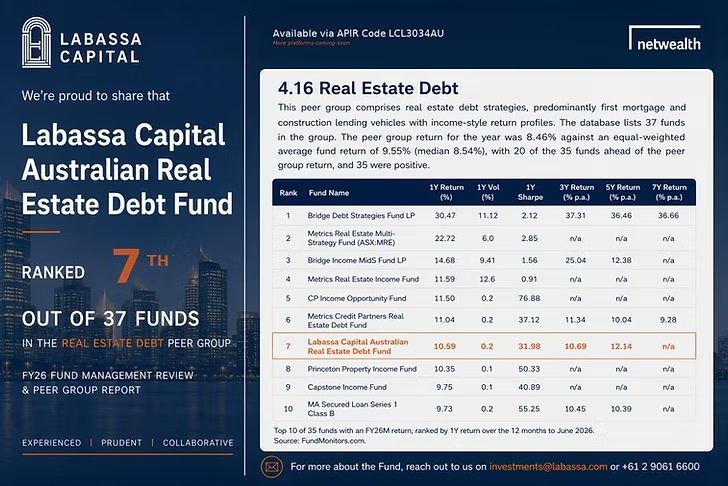
Labassa Capital Fund Ranked 7th in FY26 Sector Review
22 August, 2026
Labassa Capital Australian Real Estate Debt Fund Ranks 7th in FY26 Sector Review. Labassa Capital is pleased to share that the Labassa Capital Australian Real Estate Debt Fund ranked 7th out of 37 funds in the Real Estate Debt sector in the FY26 Fund Management Review & Peer Group Report prepared by FundMonitors.com. This independent ranking reflects the Fund’s continued focus on disciplined credit assessment, active portfolio management and the delivery of consistent risk-adjusted returns for investors. Managing Director, Melissa Hosgood, MBA, commented: “We are pleased to be recognised amongst the leading funds in the Australian real estate debt sector. This result reflects the discipline of our investment approach, the quality of our portfolio and the continued commitment of the Labassa Capital team to protecting and growing investor capital.” We thank our investors, partners for your continued support and the research insights from FundMonitors.
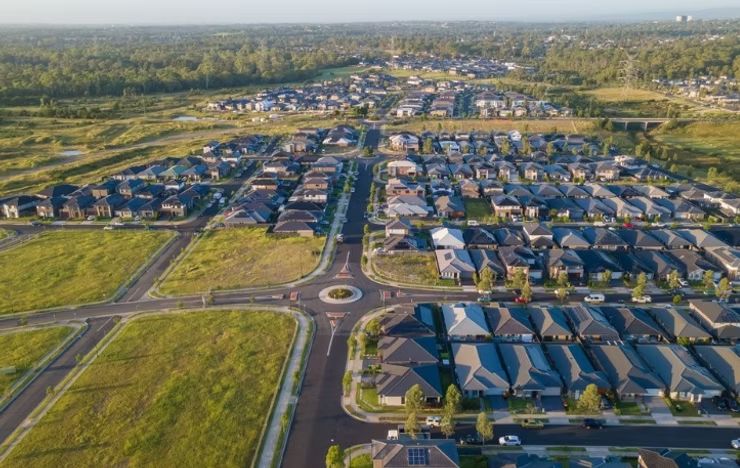
Recent Transaction | Funding Melbourne's Western Growth Corridor
22 August, 2026
Labassa Capital has settled a $20,000,000 First Mortgage Construction Facility to fund the civil works and project related costs for a 150 plus residential subdivision located 30km west of the Melbourne CBD. The project will be delivered across four stages, with Labassa initially funding Stages 1-3. Situated within a growth corridor, the development forms part of the areas ongoing transition from greenfield land to established residential communities. Civil works construction is well progressed in line with program and project budget. To date, 31% of Stage 1-3 allotments have been sold unconditionally, demonstrating ongoing purchaser demand for well-located residential land within the corridor.
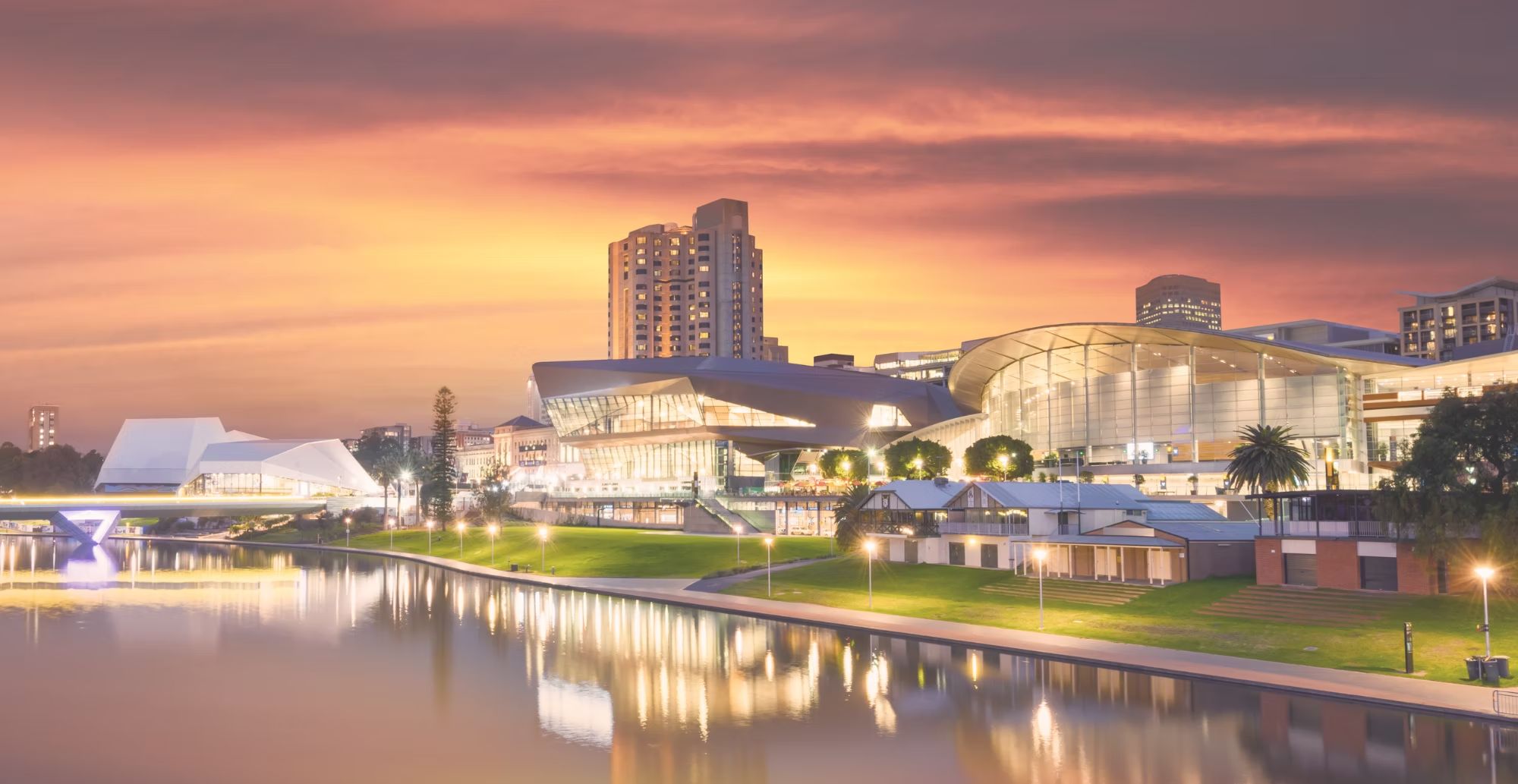
Labassa Capital Credit Fund Update July 2026
22 August, 2026
The Fund delivered a 10.70% p.a. net return on a rolling 12-month basis while maintaining a conservative 55.77% portfolio LVR with all loans continuing to be serviced as expected. The firm has achieved a record month in settlements, reflecting the strength of Labassa's origination capability and underpinned by disciplined underwriting. During the month, the Fund participated in a $55.2 million Senior Construction Facility supporting the delivery of a large-scale residential community in Adelaide's north-eastern growth corridor. The project is expected to deliver approximately 900+ residential allotments and aligns with the Fund's strategy of backing well-located projects supported by strong underlying demand and conservative capital structures. Labassa continues to maintain a highly selective investment approach and remains focused on asset-backed lending opportunities that prioritise capital preservation, conservative leverage and multiple layers of downside protection.
HS Codes view more
-
9971
-
997113
-
99711320
-
99711350
-
997120
-
997153
-
997159
-
9972
-
99721
-
99722
Export
 Australia
Member Certification
view more
-

ATCC
-
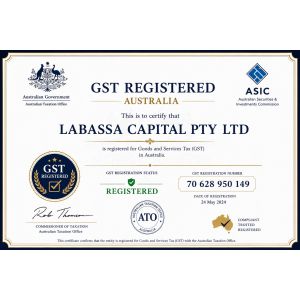
GST Registered — Australia
X
Australian Business Number (ABN) — 70 628 950 149
XTitle: Australian Business Number (ABN) — 70 628 950 149
Description: Australian Business Number (ABN) — 70 628 950 149 Send us your inquiry

Australian Company Registration — ACN 628 950 149
XTitle: Australian Company Registration — ACN 628 950 149
Description: Australian Company Registration — ACN 628 950 149 Send us your inquiry
